On the afternoon of 20 April 2026, a delegation from Fuding City, led by Vice Mayor Li Wendi and Yang Shiling, Director of the Municipal Bureau of Culture, Sports and Tourism, visited the Institute of Creativity and Innovation (ICI), accompanied by Zhou Zongyou, Chairman of Eagle Cultural Creative Ltd. They were received by Wang Yi, Chair of the ICI Council, Dean Qin Jian, Vice Dean Gan Senzhong, Vice Dean He Dongmei, and representatives of ICI’s industry-engagement office and academic staff.
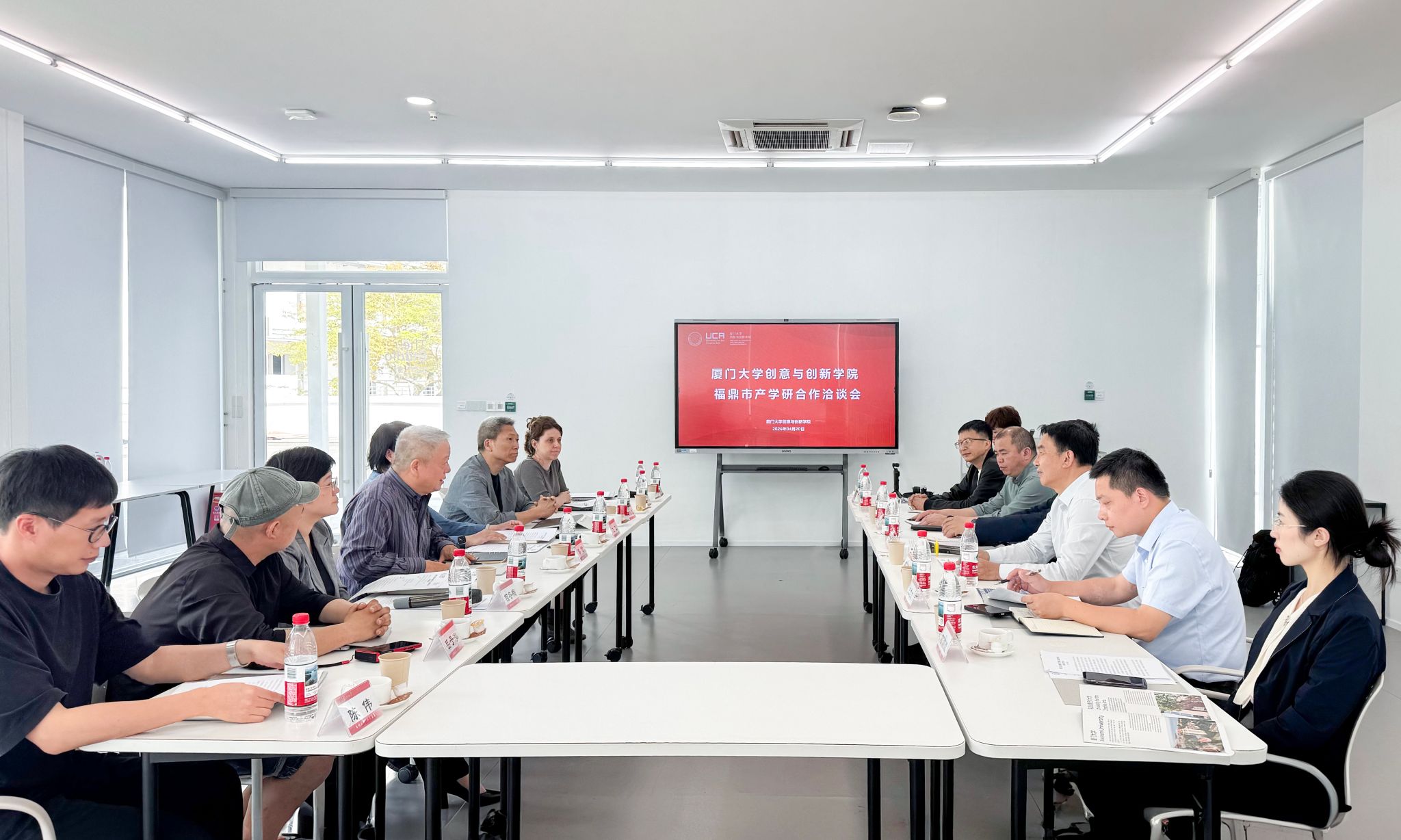
Wang Yi and Qin Jian extended a warm welcome to the delegation and provided an overview of the Institute’s educational mission, its distinctive international approach to design education, and key achievements. He Dongmei outlined ICI’s initiatives in industry–academia integration and collaborative talent cultivation. Drawing on their respective fields of environmental design and visual communication design, faculty members Yue Zihong and Chen Wei presented teaching outcomes and completed projects in cultural-tourism spatial design, urban IP development, and visual communication.
Li Wendi highlighted Fuding’s profound cultural heritage and rich cultural-tourism resources, expressing strong interest in establishing a sustained cooperation mechanism with ICI in areas such as intangible cultural heritage revitalization, cultural-tourism and creative industries, and rural revitalization. As a distinguished alumnus of Xiamen University, Zhou Zongyou outlined his company’s development trajectory and industrial capabilities. Eagle Cultural Creative Ltd., a nationally designated Key Enterprise for Cultural Export and a leader in China’s cultural and creative crafts sector, exports its products to over 80 countries and regions and holds recognized strengths in creative design, intelligent manufacturing, and global market expansion. He proposed leveraging the alumni connection as a bridge for closer engagement with ICI to jointly cultivate internationally oriented design talent and accelerate the commercialization of creative outputs.
The two sides held in-depth discussions on industry–university–research collaboration, talent cultivation for the creative industries, innovation around intangible cultural heritage, and international dissemination. They reached preliminary consensus on co-building an industry–university–research platform, jointly implementing creative projects, sharing industrial and educational resources, and nurturing international design talent, thereby laying a solid foundation for future collaboration.
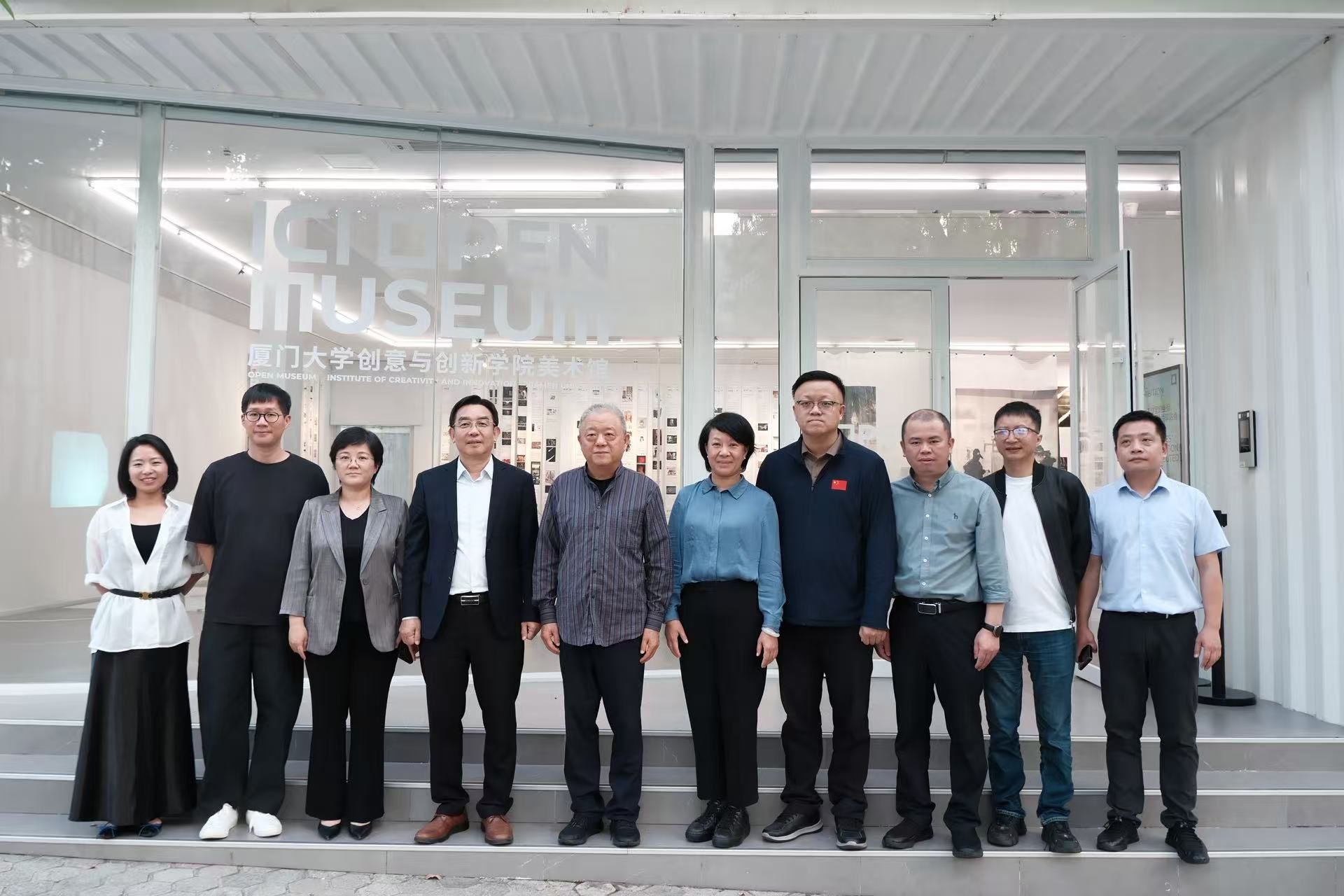
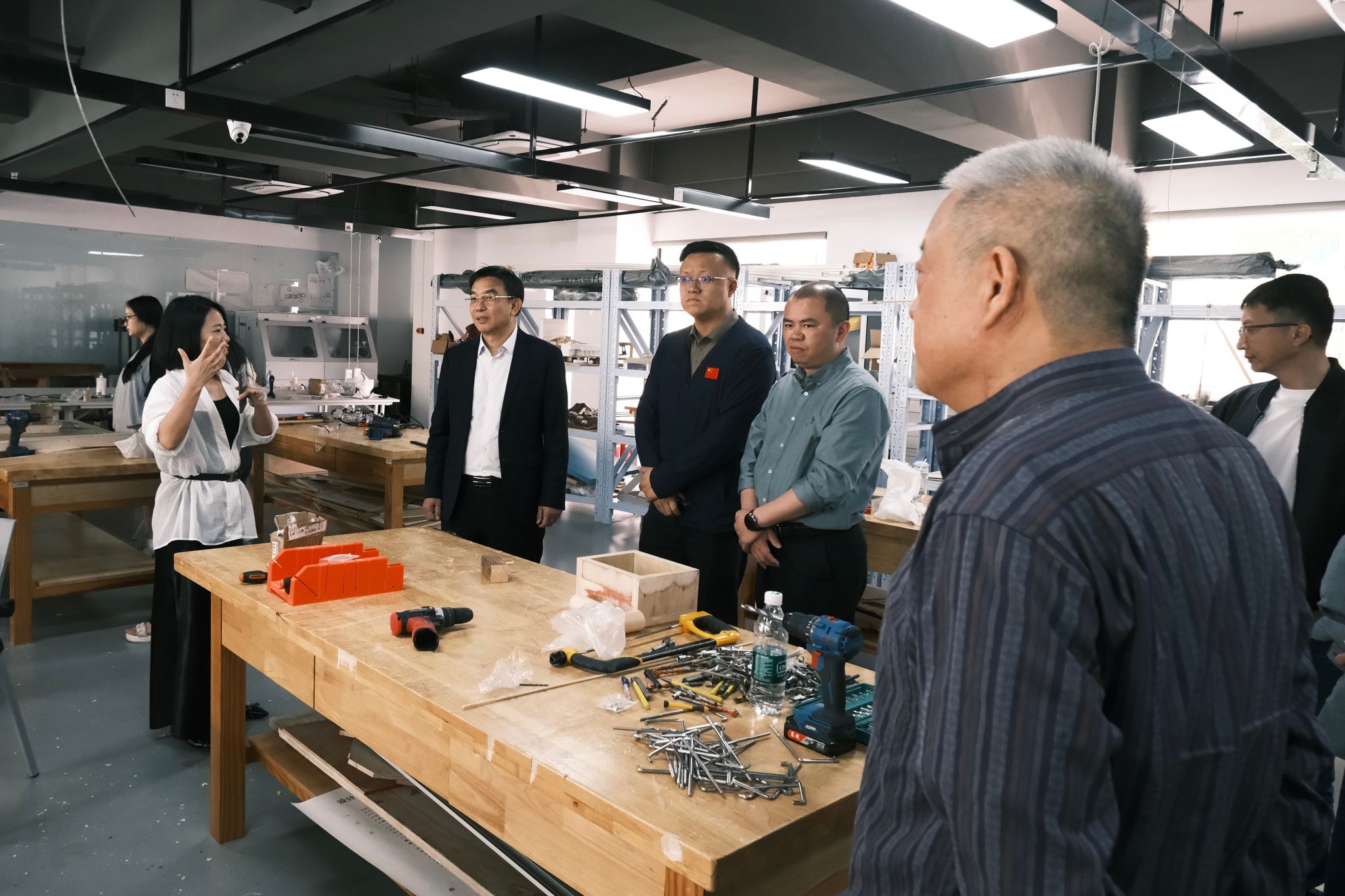
During the visit, the delegation toured the Institute’s student–faculty workshops, ICI Open Museum, and library, observed live student creation sessions, and viewed exemplary student works. They gained first-hand insight into ICI’s international, immersive, and practice-driven educational environment, and commended the Institute’s vibrant culture of innovation, cutting-edge teaching facilities, and robust practice-based learning outcomes.
This exchange has further expanded ICI’s collaborative pathways with local governments and industry leaders, helping to align teaching, research, and talent cultivation with the development of regional industries. It also strengthens ICI’s capacity to contribute meaningfully to regional cultural development and the transformation of the cultural and creative industries.

